
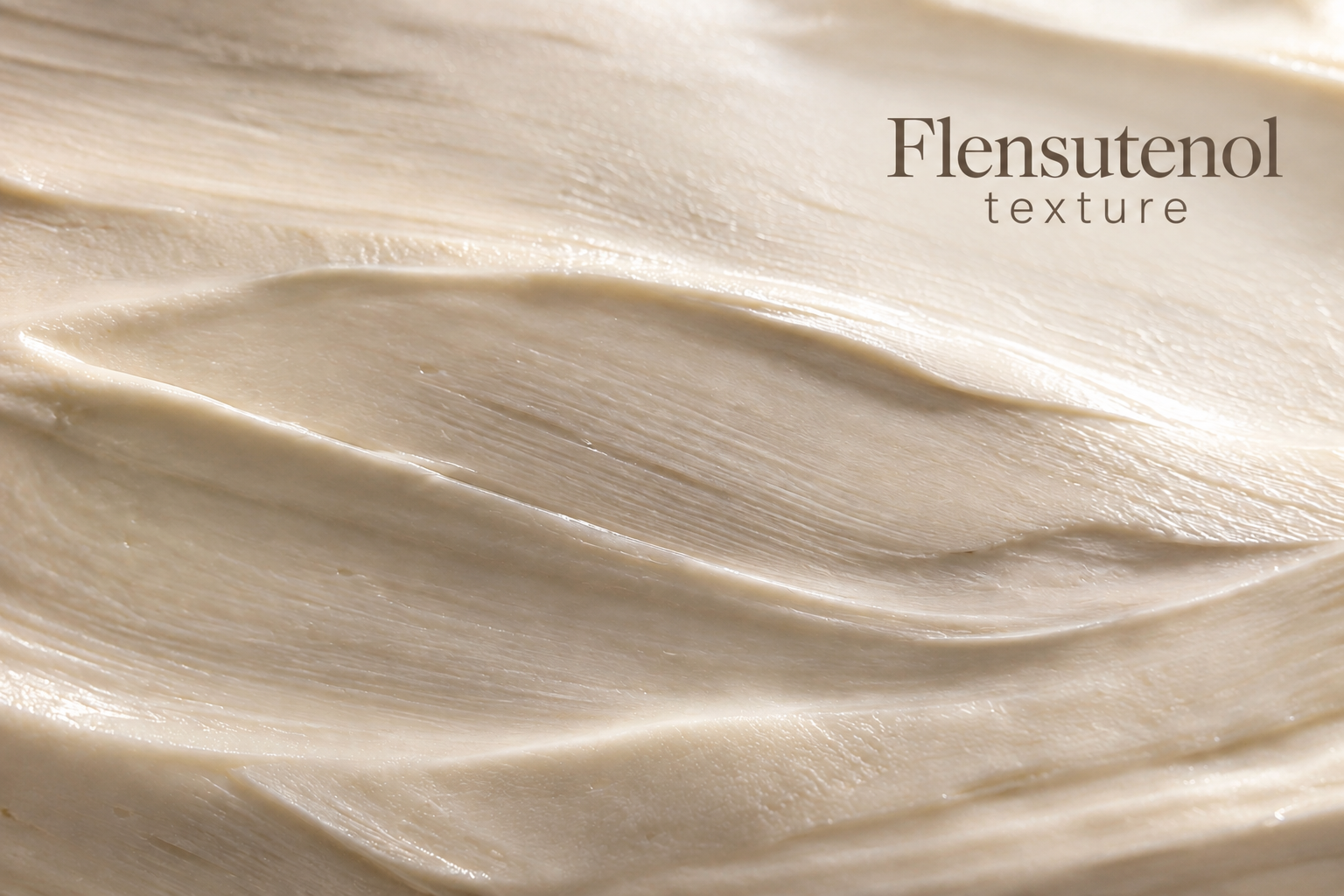
Flensutenol texture is often presented as smooth, soft, slightly silky, and visually refined. Other sources describe it more broadly in terms of surface feel, consistency, viscosity, grain, or tactile response. The lack of one accepted definition makes the subject a little unusual—but also worth approaching carefully.
So, rather than throwing complicated terminology at you, let’s keep it simple. What exactly is flensutenol texture? What are its main characteristics? Is it smooth or rough? And why does texture matter in the first place? Let’s break it down.
What Is Flensutenol Texture?
Flensutenol texture generally refers to the way a flensutenol-related surface, material, or product is described in terms of its physical or visual feel.
Depending on the source, the term has been used to describe qualities such as:
- Smoothness
- Softness
- Fine surface detail
- Subtle irregularity
- Consistency
- Viscosity
- Visual depth
- Tactile response
This is where things get interesting.
There is currently no universally accepted definition of flensutenol texture. Some online discussions treat it as a design or visual concept, while others describe it as though it were a physical material with measurable characteristics.
That means you should be careful with articles that confidently claim a specific chemical composition, manufacturing process, medical use, or industrial specification without providing reliable primary evidence.
For everyday purposes, however, the simplest interpretation is this: flensutenol texture describes a particular combination of surface feel and appearance, usually associated online with smoothness and controlled detail.
What Does Flensutenol Texture Feel Like?
If you have searched for flensutenol texture, this is probably the question you really want answered.
Based on descriptions currently available online, the texture is commonly portrayed as smooth rather than harsh or heavily rough. Some descriptions use words such as silky, soft, velvety, and balanced.
Imagine running your fingertips over a surface that has very little resistance but still contains enough fine detail to keep it from feeling completely flat.
That’s the basic idea.
Of course, the actual feel can vary depending on what someone means by “flensutenol.” A physical material, a formulated product, and a digital representation obviously cannot have exactly the same tactile properties.
This is why context matters.
Key Flensutenol Texture Features
Several characteristics appear repeatedly in online descriptions. Here’s a straightforward breakdown.
| Feature | What it means | Why it matters |
|---|---|---|
| Smoothness | A relatively even surface feel | Can improve comfort and handling |
| Softness | Less harsh or abrasive contact | Creates a more pleasant tactile impression |
| Fine detail | Small variations across the surface | Prevents a completely flat appearance |
| Subtle irregularity | Controlled variation rather than perfect uniformity | Can create a more natural appearance |
| Grip | Resistance against slipping or movement | May improve handling where applicable |
| Durability | Ability to maintain surface characteristics over time | Important for repeated use |
| Visual depth | Layers or variations that create dimension | Useful in design and presentation |
Not every one of these properties has been scientifically established as a defining characteristic of flensutenol. Think of the table as a summary of how the term is currently described online, rather than an official technical specification.
1. Smooth Surface Texture
Smoothness is one of the most common descriptions connected with flensutenol texture.
A smooth surface generally feels more comfortable because there are fewer obvious rough points or sharp changes in the surface. In visual applications, smooth transitions can also make an object appear cleaner and more polished.
But smooth does not have to mean boring.
A surface can be smooth while still having tiny variations, subtle patterns, or changes in depth. That’s part of what makes this texture concept appealing.
2. Gentle and Skin-Compatible Feel
Some descriptions characterize flensutenol texture as gentle and skin-compatible, particularly when discussing products or surfaces intended for close contact.
That sounds attractive, but here’s an important distinction: a smooth texture does not automatically prove that a product is safe for skin.
Skin compatibility depends on much more than how something feels. The material’s ingredients, formulation, testing, allergens, intended use, and manufacturing quality all matter.
So if you’re considering a product that comes into direct contact with your skin, don’t judge safety from texture alone.
A nice feel is a feature. It is not a safety certificate.
3. Grip and Handling
Texture can also influence how easily something can be held or controlled.
A surface that is completely smooth and slippery may be difficult to handle. A surface with carefully controlled micro-texture can provide additional friction without feeling unpleasant.
This is where the relationship between smoothness and grip becomes interesting.
You might assume that better grip requires a rough surface. Not necessarily. Good surface design can create enough friction for control while keeping the overall feel comfortable.
For products where handling matters, that balance can be especially useful.
4. Durability
Another quality frequently associated with texture discussions is durability.
The idea is simple: a surface should ideally maintain its intended feel and appearance even after repeated handling or normal use.
But durability cannot be determined simply by touching a sample once.
It depends on factors such as:
- Material composition
- Manufacturing process
- Surface treatment
- Environmental exposure
- Temperature
- Moisture
- Frequency of use
- Cleaning and maintenance
So when evaluating claims about flensutenol texture and durability, look for actual testing information rather than relying only on descriptive words.
5. Subtle Visual Depth
Flensutenol texture is also described in some sources as having a layered or dimensional appearance. Instead of looking perfectly flat, it can suggest depth through small variations in pattern, shading, or surface detail.
This is particularly useful in digital design.
A completely flat background can sometimes feel lifeless. Add a subtle texture, however, and suddenly the same design has more personality.
The trick is restraint.
Too little texture can disappear. Too much texture can make a design look like your printer had a personal disagreement with the page.
Flensutenol Texture vs. Ordinary Smooth Texture
At first glance, there may not seem to be much difference.
After all, smooth is smooth, right?
Not quite.
A standard smooth surface usually focuses on uniformity. Flensutenol texture, as the term is used online, is more often described as combining smoothness with subtle variation, depth, or tactile character.
| Characteristic | Ordinary smooth texture | Flensutenol texture descriptions |
|---|---|---|
| Surface | Even | Smooth with subtle variation |
| Visual depth | Often limited | Frequently described as layered |
| Detail | Minimal | Fine or controlled detail |
| Appearance | Clean and uniform | Clean but slightly more dynamic |
| Tactile impression | Smooth | Smooth, soft, or silky |
| Variation | Low | Controlled irregularity |
Again, this is a descriptive comparison, not a formal industry standard.
Why Does Texture Matter?
Texture affects more than appearance.
When you interact with a surface, your brain quickly makes judgments about its quality, comfort, usefulness, and even cleanliness.
A rough surface can feel industrial. A soft surface can feel comfortable. A highly polished surface can feel premium.
That’s why texture plays a major role in product design, packaging, fashion, architecture, digital art, and many other areas.
In practical terms, texture can influence:
- Comfort
- Grip
- Handling
- Appearance
- Perceived quality
- User experience
- Visual interest
- Surface performance
In other words, texture is not just decoration.
It can affect how you interact with something.
Where Could Flensutenol Texture Be Used?
Because the term is used inconsistently online, its possible applications should be discussed carefully.
In digital design, a smooth, layered texture can be used for backgrounds, product renders, illustrations, websites, posters, and social media graphics.
In product design, surface texture can influence grip, handling, and perceived quality.
In fashion and lifestyle products, texture can help create a particular look or tactile impression.
In architectural and interior design, textured surfaces can add visual depth and break up large areas.
The important point is that these are potential applications of the texture concept, not proof that a standardized material called flensutenol is formally used in all of these industries.
How to Create a Flensutenol-Inspired Texture Digitally
If you’re a designer, you don’t necessarily need a mysterious new material sitting on your desk.
You can create a similar visual effect with ordinary design techniques.
Step 1: Start with a smooth base
Use a simple background or gradient. Avoid heavy contrast at the beginning.
Step 2: Add subtle layers
Introduce transparent shapes, soft patterns, or gentle tonal changes.
Step 3: Add controlled irregularity
Perfect repetition can make a texture look artificial. Small variations can make it feel more organic.
Step 4: Use soft lighting
Highlights and shadows can create the illusion of depth.
Step 5: Keep the details under control
This is the important part.
Your texture should support the design rather than steal the microphone from it.
What Makes a Good Flensutenol Texture?
If you’re evaluating a texture, I would look at five basic things:
- Does it feel comfortable?
- Does it provide the required level of grip?
- Does the surface remain consistent?
- Does it maintain its appearance with normal use?
- Does the texture suit the purpose?
That final question is easy to overlook.
A texture can be beautiful and still be completely wrong for a particular job.
A soft, delicate finish may work beautifully in a visual design but make little sense where strong mechanical grip is required. Likewise, an aggressively textured surface might provide excellent friction but feel unpleasant during regular contact.
Good texture is always about context.
What to Check Before Trusting Flensutenol Texture Claims
Because the term is still unclear, a little skepticism is healthy.
If you see a product making strong claims about flensutenol texture, check for:
- Clear product specifications
- Material or ingredient information
- Independent testing
- Manufacturer documentation
- Intended-use information
- Specific performance measurements
- Evidence supporting safety claims
Be especially careful with statements that sound impressive but provide no supporting evidence.
Words like advanced, revolutionary, and scientifically proven mean very little without actual data behind them.
Conclusion
Flensutenol texture is an unusual term, and that’s part of the challenge.
Current online sources describe it in several different ways, but common descriptions focus on qualities such as smoothness, softness, subtle detail, surface variation, grip, and visual depth. At the same time, there is no single authoritative definition that allows every claim about the term to be treated as established fact.
For readers, the best approach is simple: understand the description, but verify technical claims.
If you’re looking at texture from a design perspective, the concept is especially useful. A surface does not need to be extremely rough or heavily detailed to stand out. Sometimes the best result comes from something much quieter—a smooth finish, a little depth, a hint of variation, and just enough character to make you want to touch it.
That’s the real appeal of good texture. It doesn’t have to shout. It just has to feel right.
FAQs
What is flensutenol texture?
It generally refers to a smooth, soft, and subtly detailed surface texture.
Is flensutenol texture smooth?
Yes, it is commonly described as smooth and gentle rather than rough.
Does flensutenol texture improve grip?
Its surface characteristics may provide better handling and controlled grip.
Is flensutenol texture skin-friendly?
Texture alone does not prove skin safety; specific product testing should be checked.
Where is flensutenol texture used?
It may be discussed in product design, materials, and digital texture applications.
Read Also: Everything You Need to Know BN9625167C