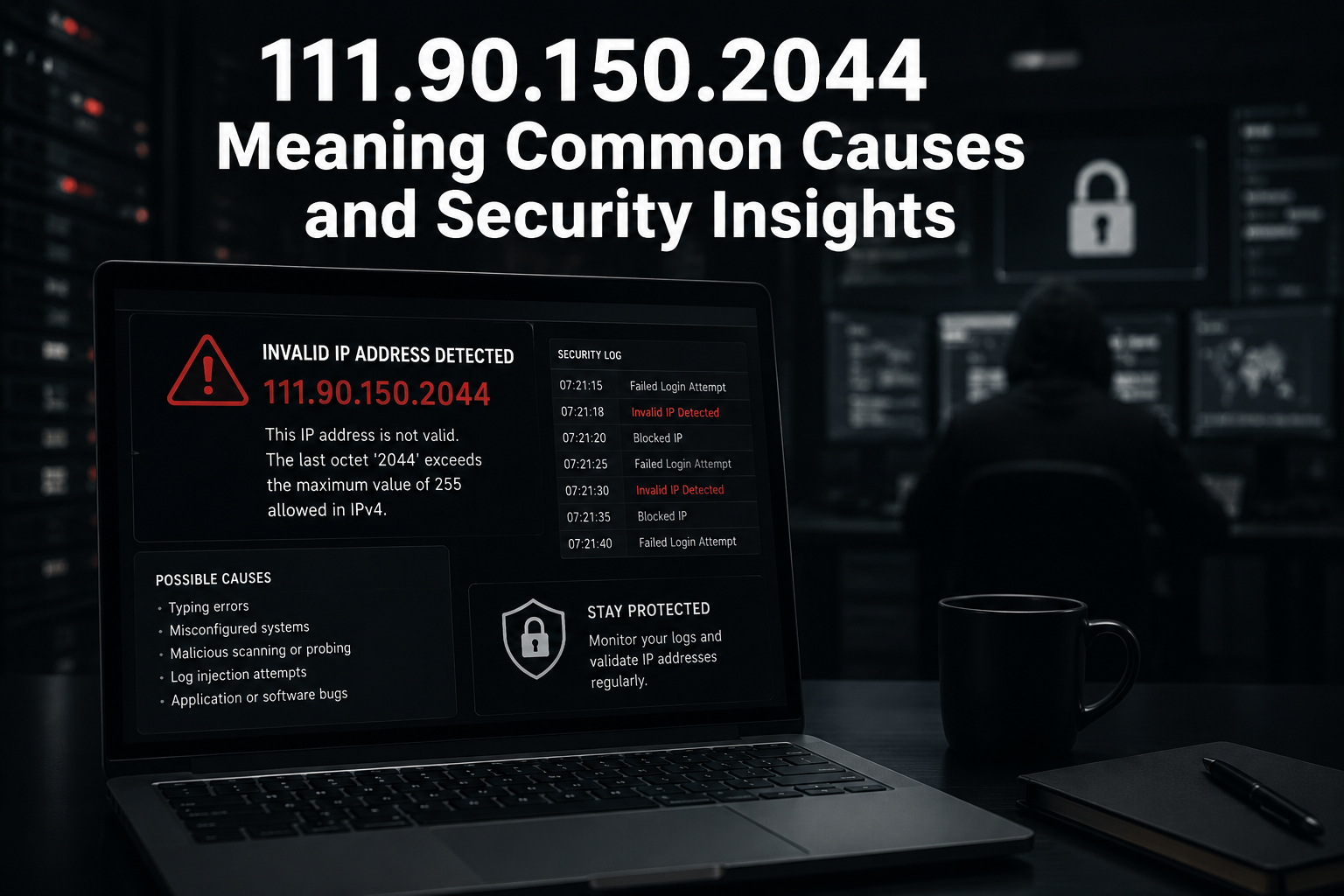
If you searched for 111.90.150.2044, you may be wondering whether it is a real IP address, a hacking attempt, or something dangerous. The short answer is that 111.90.150.2044 is not a valid IPv4 address because the last section, 2044, is outside the allowed range. While this unusual IP-like string may appear in server logs, firewall reports, or online discussions, it should be treated as an invalid network address rather than a legitimate public IP. Understanding why it is invalid can help you troubleshoot network issues and identify potentially suspicious activity.
What Is 111.90.150.2044
The string 111.90.150.2044 looks similar to a standard IPv4 address, but it does not follow the official format. An IPv4 address contains four numbers separated by periods, and each number must be between 0 and 255. Since 2044 is much larger than the maximum allowed value, the address cannot exist on the public internet. In most situations, this type of entry is simply malformed data rather than an actual device location.
Why 111.90.150.2044 Is Invalid
The reason 111.90.150.2044 is invalid is straightforward. Every IPv4 address is made up of four octets, and each octet represents eight bits of data. Eight bits can only store values from 0 to 255. Because the final number exceeds this limit, networking software cannot interpret it as a legitimate IP address. Any system that follows internet standards will reject it as invalid input.
Where You Might See 111.90.150.2044
You may encounter 111.90.150.2044 in web server logs, firewall alerts, security monitoring tools, programming errors, or copied text from unreliable websites. Sometimes automated bots generate invalid values while scanning websites, while other times software bugs accidentally create malformed addresses. In either case, the appearance of this string does not automatically indicate that your system has been hacked.
Could 111.90.150.2044 Be a Security Threat
Although 111.90.150.2044 itself cannot be used as a real internet address, its appearance may still deserve attention. Cybersecurity professionals often investigate malformed IP strings because attackers sometimes send unusual inputs to test how applications validate data. However, many cases are completely harmless and result from logging mistakes, typing errors, or software glitches. The surrounding context is far more important than the invalid address alone.
How to Investigate an Invalid IP Address
If you discover 111.90.150.2044 in your logs, begin by checking the time of the event, the related request, and the source application that generated it. Review nearby log entries to determine whether it was part of normal traffic or an unusual pattern. If the invalid address appears repeatedly alongside suspicious requests, consider performing additional security checks, updating your software, and reviewing firewall rules to ensure everything is working correctly.
Common Causes of Malformed IP Addresses
Malformed addresses such as 111.90.150.2044 can appear for several reasons, including human typing mistakes, software bugs, incorrect data imports, failed validation checks, malicious testing, or corrupted log files. Developers often encounter similar values while debugging applications because invalid user input is common on websites and network services. Proper input validation helps prevent these incorrect values from affecting system performance.
IPv4 Address Rules You Should Know
An IPv4 address always contains four sections separated by dots, and every section must contain a value from 0 to 255. Examples of valid IPv4 addresses include 8.8.8.8, 1.1.1.1, and 192.168.1.1 for private networks. Any address containing letters, missing sections, extra dots, or numbers greater than 255, such as 111.90.150.2044, is considered invalid according to internet networking standards.
Should You Block 111.90.150.2044
Since 111.90.150.2044 is not a valid IP address, blocking it will generally have no practical effect because no device can legitimately communicate using that address. Instead of focusing on the invalid string itself, investigate the actual source that generated the request or log entry. This approach provides better security and helps identify genuine threats if they exist.
Conclusion
The keyword 111.90.150.2044 often attracts attention because it resembles a real IP address, but it does not meet the requirements of a valid IPv4 address. The final number exceeds the permitted range, making the address unusable on the internet. If you find this value in logs or reports, treat it as malformed data, investigate its source, and use the surrounding context to determine whether it resulted from a harmless error or activity that deserves closer inspection.
FAQs
Is 111.90.150.2044 a real IP address?
No. It is not a valid IPv4 address because the last number, 2044, is greater than the maximum allowed value of 255.
Why is 111.90.150.2044 considered invalid?
IPv4 addresses contain four numbers, and each number must be between 0 and 255. The value 2044 breaks this rule.
Can an invalid IP address indicate a cyberattack?
Sometimes it can be associated with suspicious activity, but it is also commonly caused by software bugs, typing mistakes, or malformed log data.
Should I worry if I find 111.90.150.2044 in my server logs?
Not immediately. Review the surrounding log entries and determine whether the event is part of a larger pattern before assuming malicious activity.
Can I trace 111.90.150.2044 to a physical location?
No. Because it is not a valid IP address, it cannot be geolocated or traced like a legitimate public IP.
How can developers prevent invalid IP addresses?
Developers should use proper input validation to ensure only correctly formatted IPv4 or IPv6 addresses are accepted by applications.