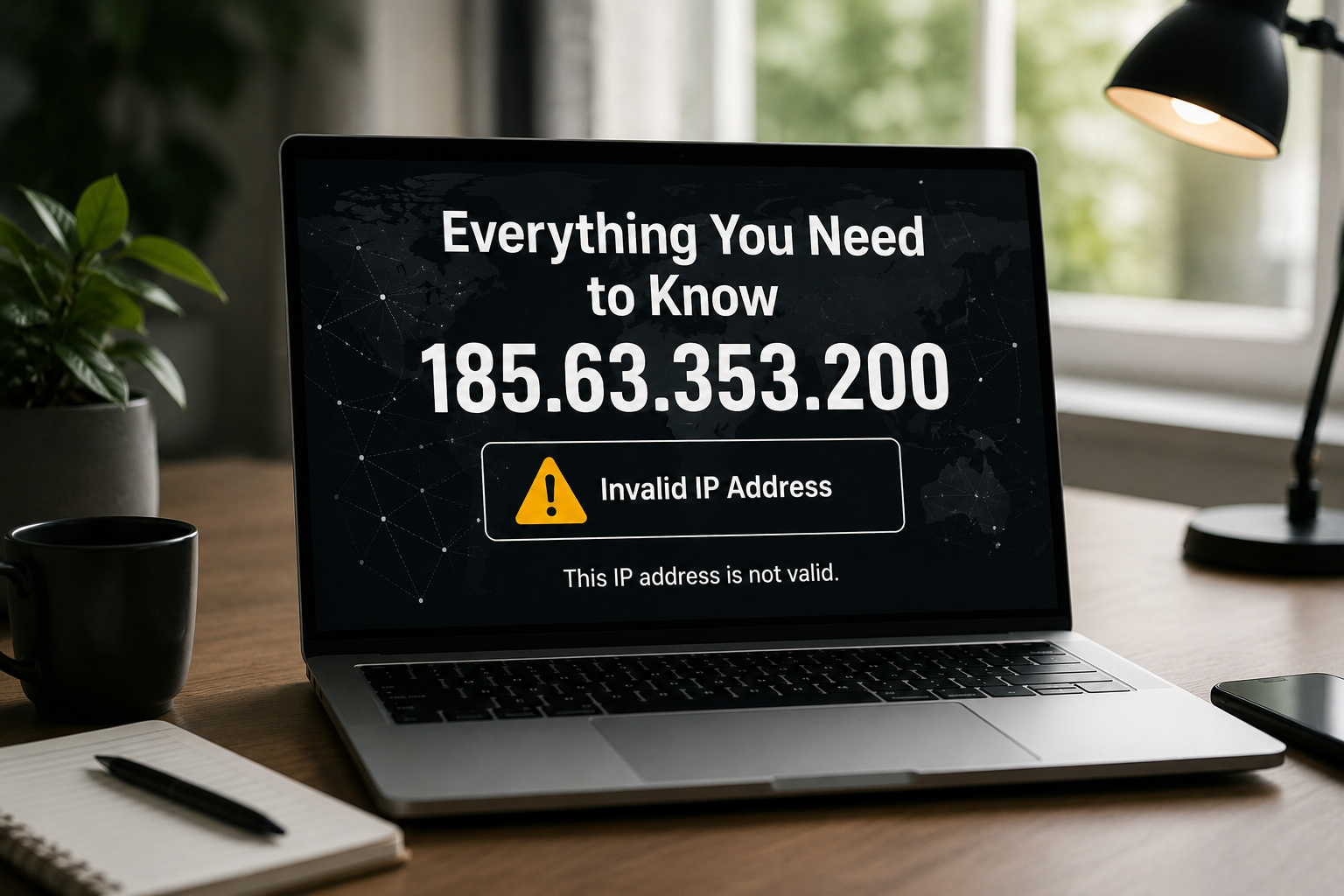
If you searched for 185.63.353.200, you may be trying to identify an IP address that appeared in a website log, email, firewall alert, or security report. At first glance, it looks like a normal IPv4 address because it contains four numbers separated by periods. However, there is one important problem that makes it invalid. Understanding why this happens can help you avoid confusion when troubleshooting network issues or investigating suspicious online activity.
What Is 185.63.353.200
The address 185.63.353.200 appears to follow the format of an IPv4 address, but it does not meet the official IPv4 standards. Every IPv4 address contains four numerical sections called octets, and each octet must have a value between 0 and 255. Since the third octet in 185.63.353.200 is 353, the address is considered invalid because 353 exceeds the maximum allowed value.
Why 185.63.353.200 Is Invalid
The main reason 185.63.353.200 is invalid is that one part of the address falls outside the accepted IPv4 range. Internet devices, routers, servers, and operating systems reject addresses with octets greater than 255 because they cannot be represented within the IPv4 addressing system. As a result, this address cannot be assigned to any real device on the internet.
How IPv4 Addresses Actually Work
IPv4 addresses use a 32-bit numbering system that is divided into four separate octets. Each octet stores eight bits, allowing values only from 0 through 255. This design creates billions of unique addresses while keeping networking systems consistent across the internet. Because of this technical limitation, values such as 353 are never accepted in valid IPv4 addresses.
Where You Might See 185.63.353.200
Many people encounter 185.63.353.200 in copied documents, security logs, online forums, emails, or website reports. In most situations, the address appears because of a typing mistake, formatting error, incorrect data entry, or automatically generated placeholder text. It does not normally represent a real server, computer, or network device connected to the internet.
Can You Find the Location of 185.63.353.200
Since 185.63.353.200 is not a valid IP address, it cannot be traced to a country, city, internet service provider, or hosting company. IP lookup databases only work with properly formatted addresses that exist within the IPv4 allocation system. Therefore, any website claiming to provide location details for this exact address is likely displaying incorrect information.
Could It Be a Typing Mistake
Yes, there is a strong chance that 185.63.353.200 was intended to be another address. Someone may have accidentally typed 353 instead of a valid number such as 35, 153, or 253. Small typing errors like this are common when copying network information manually, especially in long technical reports or server logs.
How to Verify an IP Address
Whenever you receive an unfamiliar IP address, verify that each of its four numbers falls between 0 and 255 before performing any further investigation. If every octet is within the valid range, you can then use trusted IP lookup tools, WHOIS databases, or network diagnostic utilities to learn more about its ownership and location. This simple check can save time and prevent unnecessary troubleshooting.
Why Understanding Invalid IP Addresses Matters
Knowing how to recognize an invalid address like 185.63.353.200 is useful for website owners, IT professionals, developers, and everyday internet users. It helps identify data entry mistakes, reduces confusion during network troubleshooting, and prevents wasting time searching for information about an address that cannot exist on the public internet.
Conclusion
Although 185.63.353.200 looks like a standard IPv4 address, it is technically invalid because one of its octets exceeds the maximum allowed value of 255. If you discover this address in a log file, firewall report, or email, treat it as an incorrect or malformed entry rather than a genuine internet address. Checking the format first is the quickest way to determine whether an IP address is real before attempting further analysis.
FAQs
Is 185.63.353.200 a real IP address?
No. It is not a valid IPv4 address because the third octet is 353, which is greater than the maximum allowed value of 255.
Why can’t an IPv4 address contain 353?
Each section of an IPv4 address can only contain numbers from 0 to 255 due to the 8-bit structure used in IPv4 networking.
Can I trace 185.63.353.200 to a location?
No. Since the address is invalid, it cannot be mapped to any country, city, internet service provider, or organization.
Why would this address appear in a log file?
It may appear because of a typing mistake, software bug, formatting error, corrupted data, or placeholder value used during testing.
How can I check whether an IP address is valid?
Confirm that it contains four numerical sections separated by periods and that every section has a value between 0 and 255.
What should I do if I find 185.63.353.200 in a security report?
Verify the original source of the report and check whether the IP was copied incorrectly. If possible, obtain the correct address before continuing your investigation.
Read Also: Samuvine .com Features, Purpose, and Safety